School Story: A Playful Blocky Font for Bold Branding
A Typeface That Captures Childhood Nostalgia
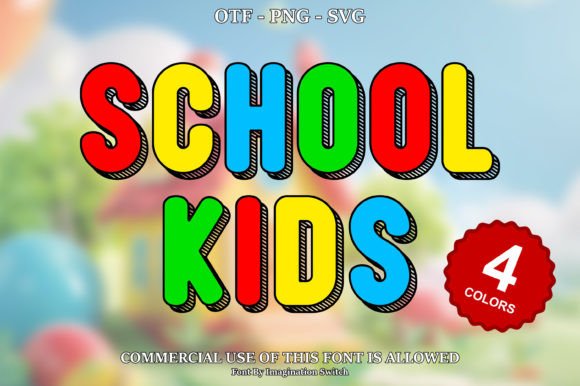
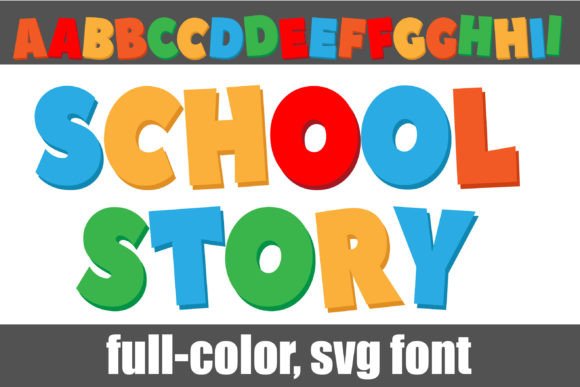
There's something undeniably magnetic about a font that feels familiar before you've even read the word it forms. That's the immediate charm of School Story — a full-color display typeface built from chunky, blocky letterforms drenched in a primary color palette. It evokes the bold simplicity of alphabet refrigerator magnets, construction paper cutouts, and classroom bulletin boards, yet it carries enough visual punch to anchor a modern design project. If you've been searching for a creative font that bridges playful energy with clean, contemporary structure, this one deserves a closer look.
School Story isn't your typical sans serif. As an OpenType full-color SVG font, each letter arrives pre-shaded in vibrant reds, blues, yellows, and greens — no additional styling required in compatible software. That means you can drop it into a headline, poster, or social media graphic and get an instantly eye-catching result without layering effects or manually coloring individual characters. For designers juggling tight deadlines or small business owners building their own marketing assets, that kind of efficiency matters.
Where This Display Font Truly Shines
The blocky construction of School Story gives it a confident, legible silhouette at large sizes, which is precisely where display fonts earn their keep. Think oversized poster titles, hero banners on a website, or the main text on product packaging designed to jump off a retail shelf. Its geometric structure keeps things readable even when the color treatment adds visual complexity, making it a practical choice for projects where both personality and clarity are non-negotiable.
Here are a few real-world scenarios where this typeface fits naturally:
- Children's brand identity: Daycares, tutoring centers, kids' clothing lines, and educational toy companies can use School Story to build a visual language that feels approachable and fun without looking amateurish.
- Event invitations and flyers: Birthday parties, school fundraisers, back-to-school campaigns, and community events benefit from a font that communicates energy and warmth at a glance.
- Packaging design: Snack brands, craft supplies, and stationery products targeting families or younger audiences can leverage the primary color palette to reinforce shelf appeal.
- Social media graphics: Instagram stories, Pinterest pins, and TikTok overlays gain instant visual interest when set in a color font that doesn't need post-processing.
- Merchandise and print-on-demand: Tote bags, stickers, notebooks, and t-shirt designs often call for bold, simple typography — exactly the territory where this font excels.
- Digital products and course materials: Educators selling printable worksheets, lesson planners, or e-learning modules can use School Story to create a cohesive, branded look across their materials.
Working With Color Fonts: What You Need to Know
Full-color SVG fonts like School Story represent a genuine shift in how designers approach typography. Instead of treating color as a separate styling layer applied after font selection, the color is embedded directly into the font file. That's powerful — but it also comes with a few compatibility notes worth understanding before you commit.
First, the good news: installing School Story works exactly like any standard .OTF font. Mac users can add it through FontBook, while Windows users can install it via their preferred font manager or the Control Panel. No special plugins, no complicated setup rituals.
Now, the practical reality: not every application supports full-color SVG rendering. Programs like Adobe Illustrator, Photoshop, InDesign, Silhouette Studio, Quark, and Inkscape handle color fonts beautifully. You'll see the full palette the moment you type on your canvas. However, in non-compatible programs, the font will render in solid black. Even within supporting applications, the font preview window often displays the black fallback version — so don't panic if the initial thumbnail looks monochrome. The color appears once you actually place the text in your document.
This distinction matters for workflow planning. If you're designing primarily in Adobe Creative Cloud or Silhouette Studio, you're covered. If your process relies on older software or niche tools, test compatibility before purchasing a commercial license to avoid frustration down the line.
Pairing School Story With Other Typefaces
A display font this distinctive works best when balanced with quieter supporting typography. Think of School Story as the loud, confident voice in the room — it needs a calm counterpart to let the overall design breathe.
For body copy beneath a School Story headline, a clean sans serif like Montserrat, Open Sans, or Lato provides excellent contrast without competing for attention. If your brand leans slightly more editorial, a simple serif font such as Lora or Merriweather can add a layer of sophistication while letting the blocky display type remain the visual anchor.
Avoid pairing it with other heavily stylized fonts — script fonts, ornamental typefaces, or additional color fonts. The result would feel cluttered and undermine the readability that makes School Story effective in the first place. The goal is contrast in weight and temperament, not a battle of competing personalities.
A practical test: set your headline in School Story, then place a paragraph of your chosen body font directly beneath it. Step back from the screen. If your eye flows naturally from the headline into the text without distraction, you've found a solid pairing. If something feels off, try adjusting the size ratio or switching to a font with different geometric proportions.
Building Brand Recognition With Consistent Typography
Typography is one of the most underestimated tools in brand building. A consistent, well-chosen typeface creates instant recognition — your audience starts associating specific letterforms with your business before they even process the words. School Story offers a distinctive enough visual identity to serve as a signature element for brands targeting families, educators, children, or anyone who responds to playful, energetic design.
That said, legibility at small sizes deserves careful consideration. Because this is a color display font, its strength lies in headlines, logos, and hero text — not long-form paragraphs or fine print. Use it strategically for maximum impact, and let a simpler typeface handle the heavy lifting in body content. This division of labor actually strengthens your visual hierarchy, guiding the viewer's eye exactly where you want it.
Before finalizing any project, review the full character set. School Story includes an alternate case with additional color variations accessible through your system's character map. Exploring these options lets you fine-tune the palette to match specific brand guidelines or seasonal campaigns without purchasing a separate font family.
Final Thoughts on Choosing the Right Creative Font
Selecting a typeface is never purely aesthetic — it's a strategic decision that shapes how your audience perceives your message. School Story occupies a specific, valuable niche: it's bold enough to command attention, playful enough to feel approachable, and structured enough to maintain professionalism. For designers, marketers, and creative entrepreneurs working on projects that need to feel fun yet polished, it fills a gap that many standard font libraries leave open.
Take the time to test it within your actual workflow before rolling it out across an entire brand system. Check compatibility with your primary design tools, experiment with color pairings, and see how it performs across both digital and print formats. A premium font earns its value not in the download, but in the dozens of projects it elevates over months and years of use.